
Sabalos Reef Diving in Playa del Carmen
Overview
Sabalos Reef is a lively shallow reef dive in Playa del Carmen, appreciated for its stronger water movement, healthy coral formations and frequent sightings of larger fish cruising through the blue.
If you want to understand how this dive site fits into the local reef system, you can explore our complete guide to reef diving in Playa del Carmen, where we explain the local conditions, marine life and the best dive sites along the Riviera Maya.
Sabalos is often chosen by divers who enjoy a bit more action on shallow dives. The site is known for its drift profile, scattered coral heads and sandy areas where marine life concentrates when current is running.
Schools of fish, larger predators and the possibility of seeing tarpon, barracudas or rays give Sabalos a distinct personality among Playa del Carmen reef dives.
Depth and Profile
Sabalos Reef is generally a shallow dive site, with depths ranging between about 6 and 14 meters (20 to 50 feet).
The profile follows low coral formations, open sandy channels and reef edges where current can be more noticeable than at easier nearby sites. Even though it is shallow, the movement of the water can make the dive feel more dynamic.
These conditions make Sabalos a very enjoyable site for recreational divers who are comfortable in current and want to cover a lot of reef during a single dive.
Marine Life
Sabalos Reef hosts a rich mix of Caribbean reef life, especially species that are attracted by current and active fish movement.
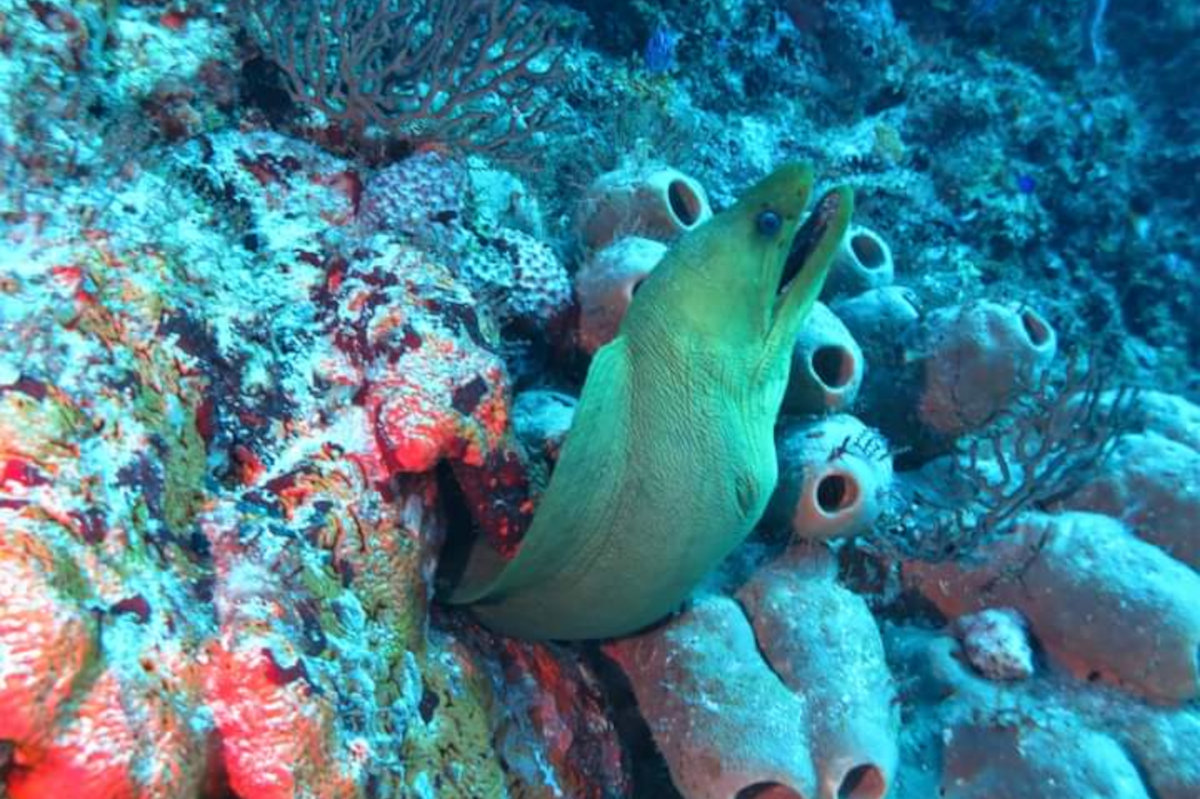
Divers may encounter tarpon, barracudas, large snappers, grunts and the occasional eagle ray passing over the reef. Healthy hard and soft corals provide shelter for angelfish, parrotfish, trumpetfish and many smaller reef species.
Because of the water movement and the concentration of fish, Sabalos often feels busy and full of life, making it a rewarding dive for marine life observation and wide-angle underwater photography.
Dive Conditions
Sabalos Reef offers warm water year-round, good visibility and a more energetic drift profile than some nearby reefs. Here is what you can expect.
Temperature
Water temperatures at Sabalos Reef remain warm throughout the year, typically ranging between 26 and 29°C (79 to 84°F).
Most divers are comfortable with a 3 mm wetsuit, while many prefer shorties or rash guards during the summer months.
Visibility
Visibility at Sabalos Reef usually ranges between 18 to 30 meters (60 to 100 feet).
When seas are calm, divers can enjoy broad views of the reef and the fish activity moving along its edges.
Currents
Currents at Sabalos Reef are generally moderate to strong for a shallow site.
That extra movement is part of what makes the dive interesting, attracting larger fish and creating a classic Playa del Carmen drift experience.
Depth Range
Sabalos Reef is typically dived between 6 and 14 meters (20 to 50 feet).
The shallow depth allows for long bottom times, while the current keeps the dive active and engaging.
Sea Conditions
Because Sabalos Reef is located close to the coast, boat rides are short and access is easy.
Most dive boats reach the site in 5 to 10 minutes from Playa del Carmen.
Best Time to Dive
Sabalos Reef can be enjoyed throughout the year.
It is especially appealing on days with good visibility and manageable current, when marine life activity across the reef is at its best.
Who Should Dive Here
Sabalos Reef is best for certified divers who feel comfortable in current.
Although it is shallow, the site can be more demanding than calmer local reefs, so it is a great option for divers who already have some ocean experience and want a more active drift dive.
It is also a strong choice for underwater photographers and for divers who enjoy seeing larger fish moving through the reef.
How to Dive Sabalos Reef in Playa del carmen
Dives at Sabalos Reef usually follow the current along coral structures, sandy channels and open reef sections where fish activity is often high.
The site is explored as a drift dive, allowing divers to move comfortably with the guide while covering a large area without much effort. This makes the dive feel dynamic even though the reef itself is relatively shallow.
Divers typically spend the dive scanning the blue for larger species while also observing reef fish and coral life closer to the bottom.