Does Sargassum Affect Diving in Playa del Carmen?
Does Sargassum Affect Diving in Playa del Carmen?
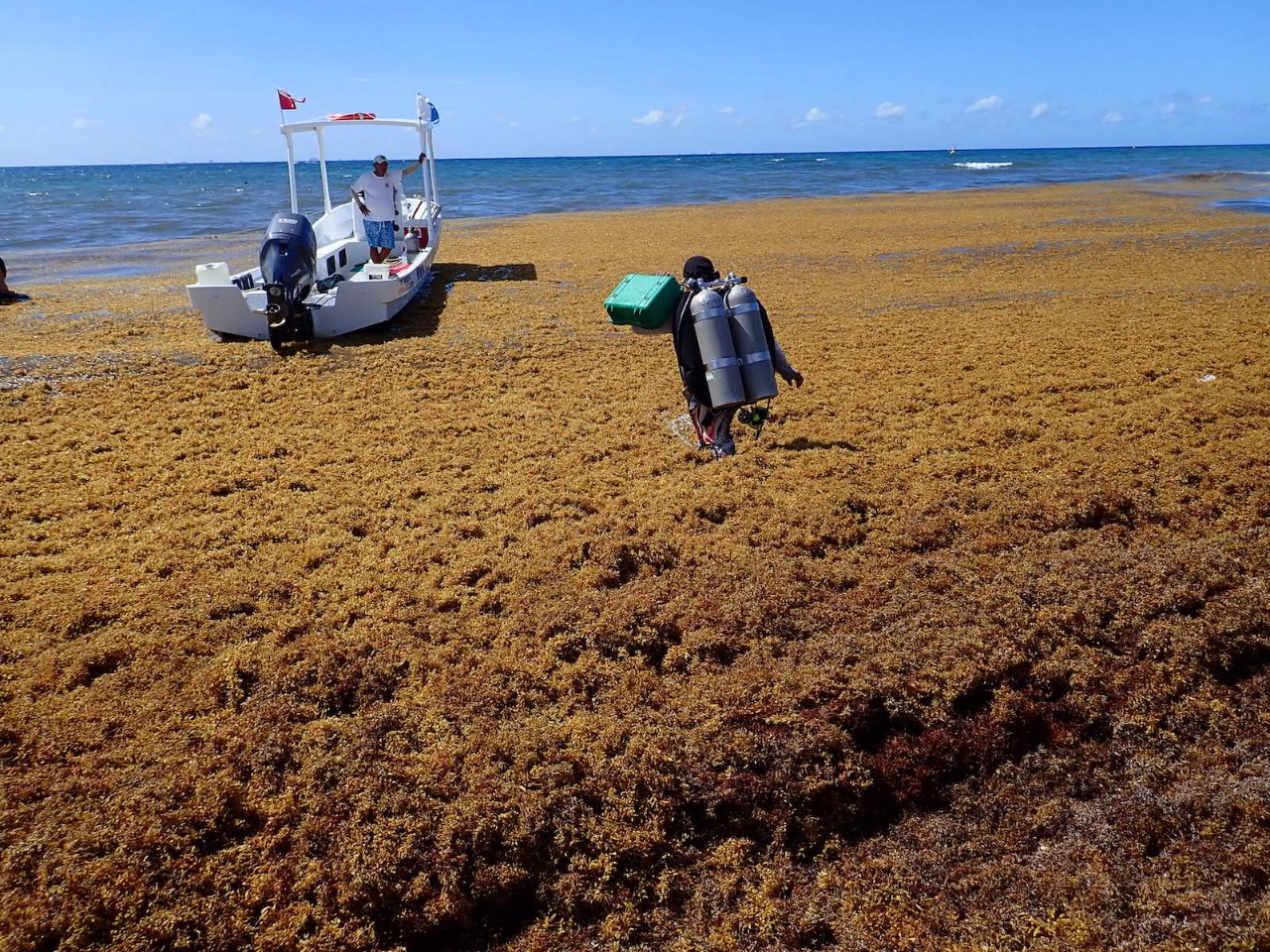
If you’re planning a scuba diving vacation in Playa del Carmen, you’ve probably come across photos or news reports showing beaches covered with sargassum. It’s one of the most common concerns among travelers visiting the Mexican Caribbean, and naturally, many divers wonder:
“Will sargassum affect my diving trip?”
The good news is that the answer is often no.
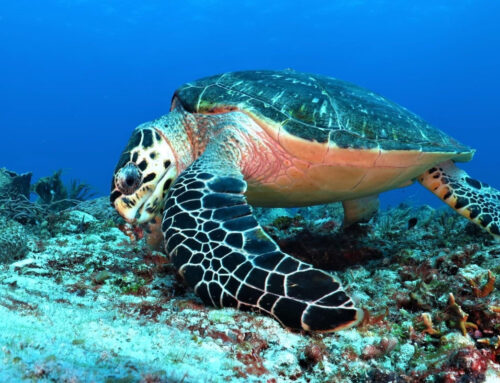
While sargassum can sometimes affect the appearance of beaches, it does not necessarily affect scuba diving. In fact, many visitors are surprised to discover that they enjoy excellent underwater visibility, healthy reefs, and unforgettable cenote dives even during the sargassum season.
At Pluto Dive, we receive questions about sargassum almost every week. That’s why we decided to explain what it is, when it usually arrives, how it affects diving conditions, and why you shouldn’t automatically cancel your diving holiday because of what you see in photos online.
What Is Sargassum?
Sargassum is a naturally occurring floating brown seaweed found in the Atlantic Ocean. It plays an important ecological role by providing shelter and food for many marine species. However, over the past decade, larger seasonal blooms have reached the Caribbean, including the Riviera Maya, creating accumulations along certain beaches.
Scientists continue to study why these blooms have become larger in recent years. Factors such as ocean currents, water temperature, nutrient levels, and seasonal weather all contribute to the movement and growth of sargassum across the Atlantic.
If you’d like to learn more about the science behind sargassum, reliable information is available from the NOAA Atlantic Oceanographic and Meteorological Laboratory and the University of South Florida’s Sargassum Watch System, which monitor conditions throughout the Atlantic and Caribbean.
When Is Sargassum Season?
Sargassum is a seasonal phenomenon, but there is no exact calendar because every year is different.
In Playa del Carmen, the season generally begins between April and May and may continue until October. The largest accumulations are often seen during June, July, and August, although some years are lighter than others.
Weather conditions also play a huge role. Wind direction and ocean currents can change dramatically from one day to the next, meaning that one beach may have visible sargassum while another beach just a few kilometers away remains almost completely clear.
For this reason, it’s impossible to predict conditions weeks in advance. Local knowledge and daily monitoring are much more reliable than looking at photos or videos posted online days earlier.
Does Sargassum Affect Scuba Diving?
This is the question every diver wants answered.
Fortunately, in most cases, scuba diving is affected far less than people expect.
Sargassum floats on the surface of the water and usually accumulates along the shoreline. Once divers descend below the surface, conditions are often completely different.
Underwater visibility depends on many factors, including currents, wind direction, recent weather, and the specific dive site—not simply on whether there is sargassum on the beach.
Some reef sites may experience reduced visibility on certain days, while others remain clear and enjoyable. This is why choosing an experienced local dive center is so important.
At Pluto Dive, we check sea conditions every day and select the dive sites that offer the best possible experience for our guests. Instead of following the same schedule every day, we adapt our plans according to the latest conditions, ensuring safe and enjoyable diving whenever possible.
Which Dive Sites Are Less Affected?
One of the biggest misconceptions about sargassum is that if there is seaweed on the beach, every dive site will have poor conditions. Fortunately, that isn’t the case.
The Riviera Maya offers a variety of reef dive sites, each influenced differently by currents, wind direction, and local weather. Some sites may have reduced visibility on certain days, while others remain clear and full of marine life.
This is why local experience is invaluable. Rather than following a fixed schedule, we evaluate the daily conditions and select dive sites that offer the best visibility and the most enjoyable diving experience possible.
Every day is different, and flexibility allows us to make the most of the conditions.
Does Visibility Decrease?
Sometimes it can—but not always.
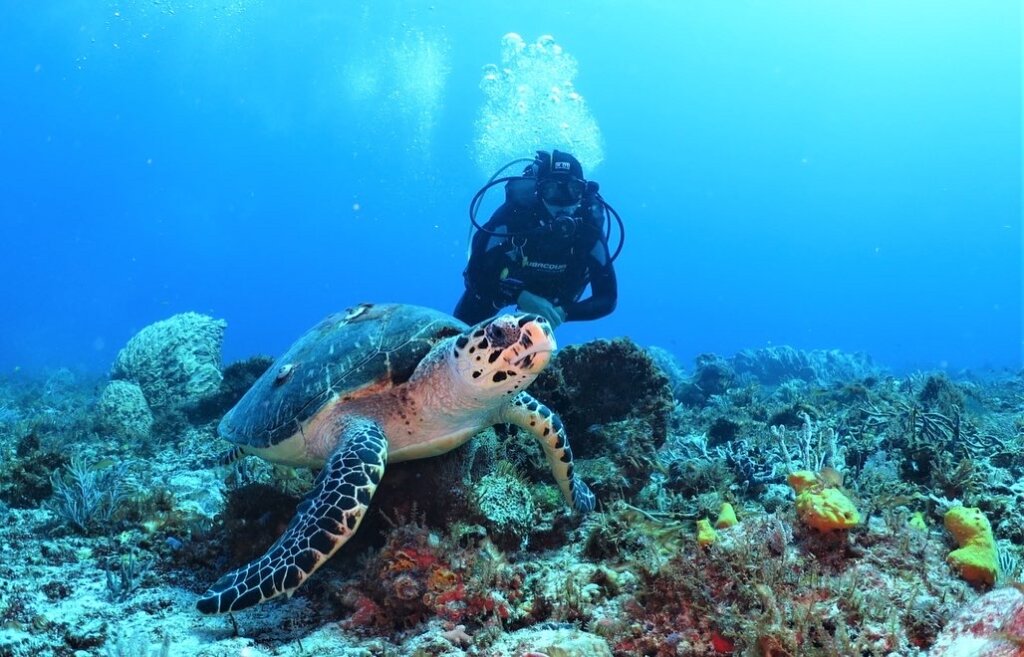
Many divers expect poor visibility as soon as they hear the word “sargassum.” In reality, underwater conditions are often much better than expected.
Because sargassum floats on the surface, it doesn’t automatically affect visibility at diving depth. Factors such as currents, wave action, rainfall, and recent weather usually have a greater influence on underwater visibility than the presence of sargassum along the shoreline.
There are days when the beach has noticeable sargassum while divers enjoy excellent visibility just a short boat ride offshore.
This is why it’s always best to rely on current local information rather than social media photos that may have been taken several days earlier.
Is Snorkeling More Affected Than Scuba Diving?
Generally, yes.
Snorkeling takes place at or near the surface, exactly where sargassum naturally floats. This can make entering the water less comfortable and may reduce visibility for snorkelers in some locations.
While every day is unique, scuba diving is usually much less affected than surface activities.
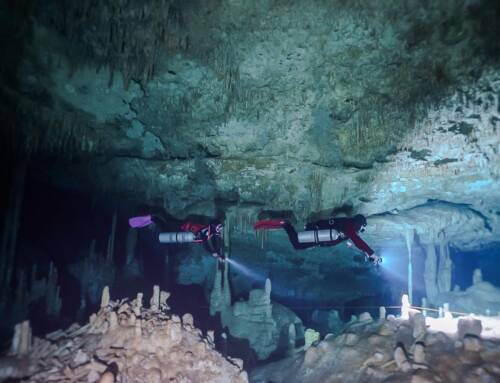
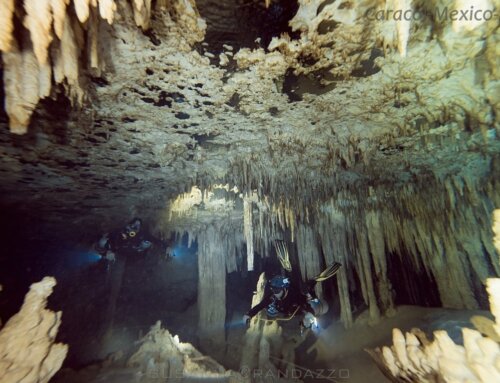
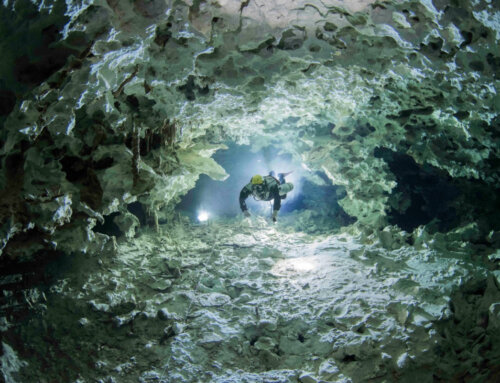
Why Cenote Diving Is Not Affected
One of the greatest advantages of diving in Playa del Carmen is the incredible network of cenotes.
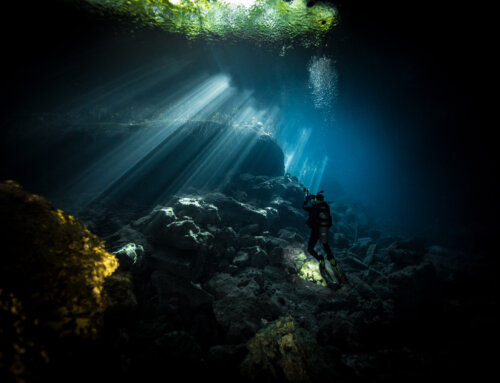
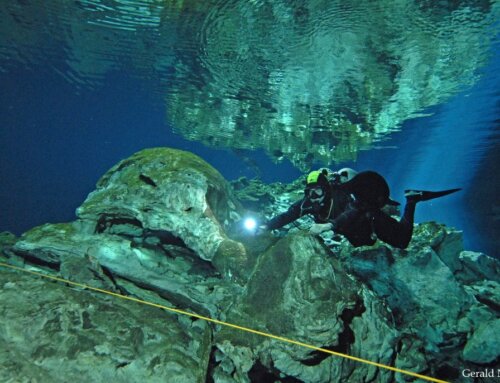
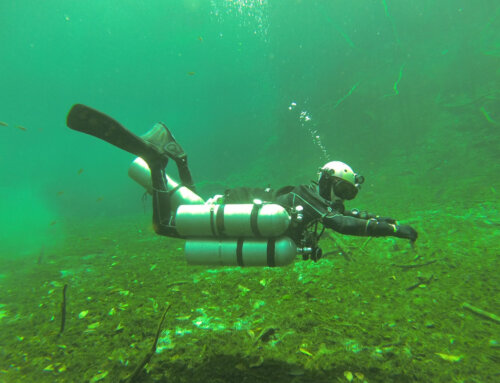
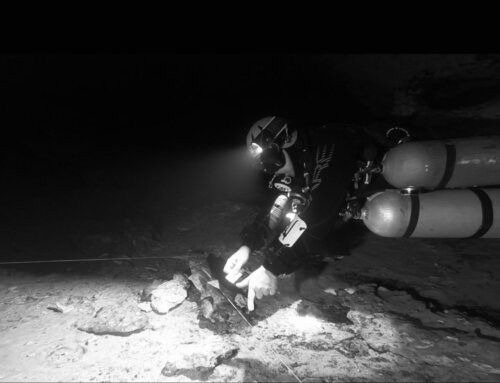
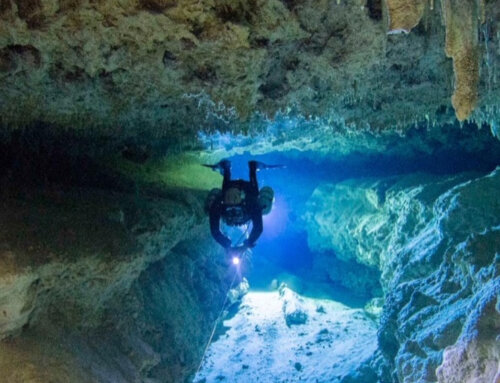
Unlike the Caribbean Sea, cenotes are freshwater sinkholes connected to an underground cave system. Because they are located inland, they are completely independent of ocean conditions.
That means:
- No waves
- No tides
- No sargassum
- Crystal-clear water all year round
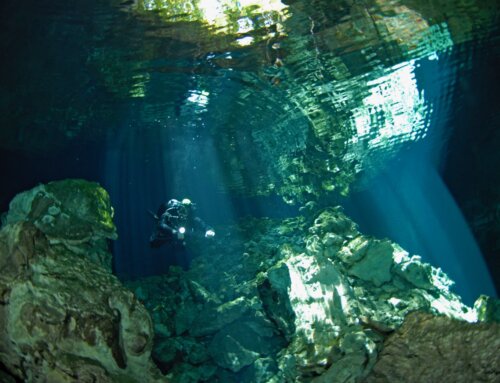
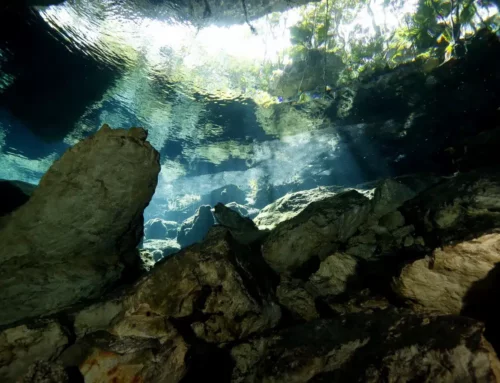
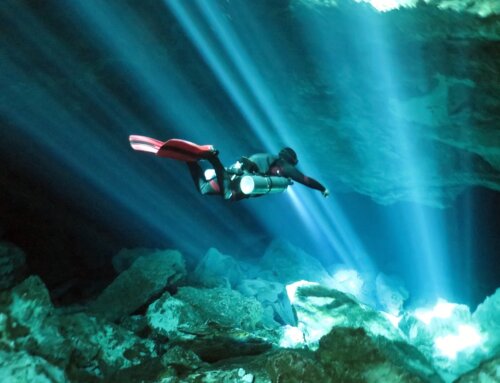
With visibility often exceeding 100 meters (330 feet), cenote diving remains one of the most spectacular diving experiences in the world, regardless of the season.
For many visitors, combining reef dives with cenote dives is the perfect way to experience the incredible diversity of the Riviera Maya.
Why Local Knowledge Makes the Difference
Conditions along the Riviera Maya can change quickly.
A shift in wind direction overnight can improve one dive site while making another less suitable. That’s why experienced local dive operators constantly monitor forecasts, sea conditions, and visibility reports before deciding where to dive.
At Pluto Dive, we don’t simply follow a fixed itinerary. Every morning we assess the latest conditions and choose the dive sites that will provide the safest and most enjoyable experience for our guests.
This flexibility allows us to make the best possible decisions throughout the year, including during the sargassum season.
Our goal is always the same: to give every diver the best underwater experience possible, regardless of the conditions on the beach.
Frequently Asked Questions
Can You Dive in Playa del Carmen During Sargassum Season?
Yes, absolutely.
Thousands of divers visit Playa del Carmen during the sargassum season every year and enjoy fantastic underwater experiences.
Although some beaches may have visible sargassum, many reef dive sites continue to offer excellent diving conditions. Local knowledge is essential, as daily weather, wind, and currents all play an important role in selecting the best dive sites.
At Pluto Dive, we monitor conditions every day to provide our guests with the best possible diving experience.
Are Cenotes Affected by Sargassum?
No.
Cenotes are freshwater cave systems located inland, completely separate from the Caribbean Sea. They are not affected by sargassum, tides, or waves.
With crystal-clear water and incredible visibility throughout the year, cenote diving is always an excellent option and one of the highlights of diving in the Riviera Maya.
Which Months Have the Most Sargassum?
Although every year is different, June, July, and August generally experience the highest levels of sargassum.
The season usually begins in April or May and gradually decreases toward October, but weather patterns can change conditions quickly. Some weeks see very little sargassum, while others may experience larger accumulations.
For this reason, it’s always best to check current conditions shortly before your trip.
Should I Cancel My Diving Trip?
In most cases, no.
Many visitors worry after seeing photos of sargassum online, only to discover that their dives are far better than expected.
Experienced local dive centers adapt to the daily conditions by choosing the most suitable dive sites, while cenotes remain completely unaffected all year.
If you’re planning a diving holiday, don’t let photos of the beach discourage you. The most spectacular part of your adventure takes place underwater, where conditions are often very different from what you see on the shore.
Final Thoughts
Sargassum has become a seasonal part of the Caribbean environment, but it should not define your diving holiday.
Playa del Carmen continues to offer world-class reef diving, breathtaking cenote diving, and outstanding training opportunities throughout the year. With experienced local guides, flexible planning, and access to a wide variety of dive sites, it’s often possible to enjoy incredible dives even during the sargassum season.
At Pluto Dive, our priority is always to provide safe, enjoyable, and memorable diving experiences. We carefully monitor sea conditions every day and select the best dive sites to ensure our guests make the most of their time underwater.
If you’re planning a diving trip and have questions about current conditions, we’re always happy to help. Contact us for the latest updates, honest advice, and personalized recommendations.
We look forward to diving with you in the beautiful waters of Playa del Carmen